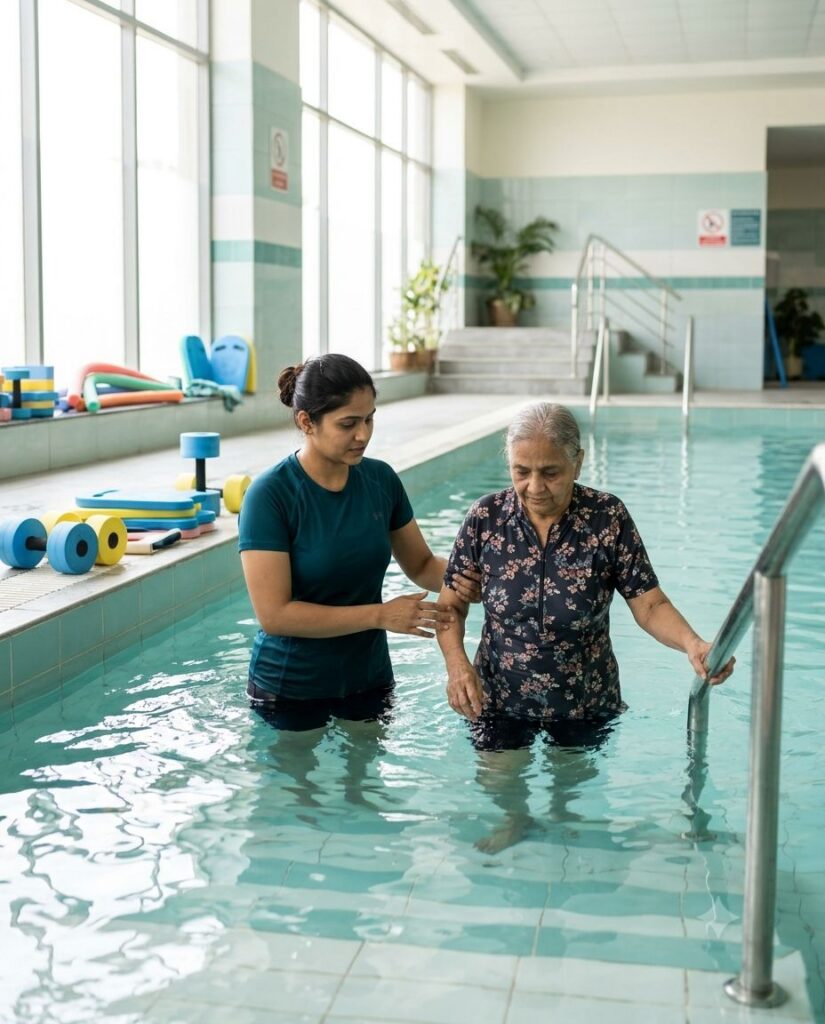
Quick answer: Aquatic therapy (also called hydrotherapy or aquatic physiotherapy) is physiotherapy done in a warm-water pool. Buoyancy takes weight off painful joints, warmth helps muscles relax, and water resistance builds strength, so many people can move and exercise in water before they can do the same on land.
Aquatic therapy is one of the most searched physiotherapy services in Goa, and for good reason. For people with painful joints, weak muscles or poor balance, exercising in water can make progress possible when land exercise is too difficult. Trinity Physiocare & Aquacure has an indoor therapy pool at our clinic in St. Inez, Panaji, and our lead physiotherapist is certified in aquatic therapy by the IATF (Switzerland).
How water helps
- Buoyancy reduces the load on hips, knees and the spine, so walking and exercise hurt less.
- Warmth helps muscles relax and can ease stiffness.
- Resistance in every direction builds strength without heavy weights.
- Hydrostatic pressure gives gentle support around the body and can help with swelling and balance confidence.
Who aquatic therapy can help
- Knee or hip osteoarthritis, and rehabilitation after joint replacement (once wounds have healed).
- Back pain, including people who find land exercise painful.
- Neurological conditions such as stroke, Parkinson’s disease and multiple sclerosis.
- Children with cerebral palsy or developmental delay, where water makes movement easier and more playful.
- Older adults working on balance, walking and general fitness.
- Sports injuries, as an early stage before running and jumping on land.
It is not suitable for everyone. Open wounds, some skin infections, uncontrolled epilepsy, certain heart or breathing conditions, and incontinence may need to be managed first. Your physiotherapist will screen you before your first pool session.
What happens in a session
- Assessment on land first — history, movement, strength and balance, plus safety screening.
- An individual programme — goals and exercises chosen for you, not a group class.
- Supervised pool session — typically around 30 minutes, using equipment such as floats, hand paddles and fins as needed.
- Progression — exercises move towards land-based work as you improve, so the gains carry into daily life.
Aquatic therapy vs land physiotherapy
| Aquatic therapy | Land physiotherapy | |
|---|---|---|
| Load on joints | Much lower | Full body weight |
| Best for | Early rehab, pain, weakness, balance fear | Building to full function, sport, daily tasks |
| Strength building | Gentle to moderate | Can be progressed further |
| Typical use | Often combined with land sessions | Core of most rehab plans |
How to choose the best aquatic therapy in Goa
A swimming pool is not a therapy pool. When comparing options, ask:
- Is the session run by a qualified physiotherapist with aquatic therapy training?
- Is the pool warm, indoor and designed for therapy, with safe entry and exit?
- Is every session one-to-one or closely supervised?
- Is there an assessment and safety screen before you enter the water?
- Will the plan include land exercises so progress carries over?
You can read more about our service on the aquatic therapy page.
Frequently asked questions
Do I need to know how to swim for aquatic therapy?
No. Exercises are done standing or supported in the water, and your physiotherapist is with you throughout.
Is aquatic therapy the same as hydrotherapy?
The terms are often used interchangeably in India. Both describe physiotherapy exercises done in warm water under supervision.
Can I do aquatic therapy after knee replacement?
Often yes, once your surgical wound has fully healed and your surgeon agrees. It can make early walking and bending practice easier.
Is aquatic therapy suitable for children?
Yes, for many children, including those with cerebral palsy or developmental delay. Sessions are adapted to the child and a parent is usually involved.
Want an assessment? Trinity Physiocare & Aquacure is at Evergreen Apartments, G-1, St. Inez, Panaji. No referral is needed. Book an appointment or call/WhatsApp 97656 34278.
This article is general information, not a diagnosis. If you have sudden weakness, numbness, chest pain, loss of bladder or bowel control, or a serious injury, call 108 or go to the nearest emergency department.